We may not have seen any red squirrels in Mar Lodge Estate (or anything else with either fur or feathers, as it happens); but, even in August, it was clear that 2019 was going to be a bumper year for fungi. These are a few of the species we found while walking through the pine forest, all taken hand-held with a Fuji X-E3 and 16mm f/1.4 lens without reflector or flash. No attempt has been made to do any "gardening" (either physical or digital) so these specimens are exactly as we found them.
Random postings from an itinerant engineer who would rather be taking pictures or catching trout on the fly...
Sunday, 5 January 2020
Saturday, 4 January 2020
Scotland 2019 20: Mar Lodge Estate
Mar Lodge Estate, now operated by National Trust for Scotland, is the UK's largest nature reserve and is situated in the heart of the Cairngorms National Park. It was originally a 19th century hunting lodge, and now comprises one of the few remaining areas of Caledonian pinewoods. The river Dee runs through the estate, which is now a centre for hiking and other outdoor pursuits. It is reputedly a good place to see red squirrels in their natural habitat, although they remained elusive on the day we visited. Perhaps they didn't like the rain?
We might not have spotted a red squirrel, but other people claimed to have more success. Mind you, one of the entries on the board implied that a haggis had been spotted recently...
We followed the Glen Lui trail, past the old salmon ladder and waterfall. Despite the car park being totally full, we hardly met a soul during the two hour walk around the forest. A very beautiful and peaceful location, even if the local wildlife was playing hard to get.
Friday, 3 January 2020
Scotland 2019 19: Deeside
I didn't know it at the time I booked our accommodation in Pitlochry, but our stay coincided exactly with the Blair Castle International Horse Trials. Since we're fans of neither crowds nor horses, we decided to head out towards Braemar for a bit of peace. Although the weather wasn't great, the views were still pretty spectacular - especially going past the Glenshee Ski Centre and the subsequent drop into the village of Braemar itself.
Once in Braemar we headed west along Deeside towards the Mar Lodge Estate Nature Reserve.
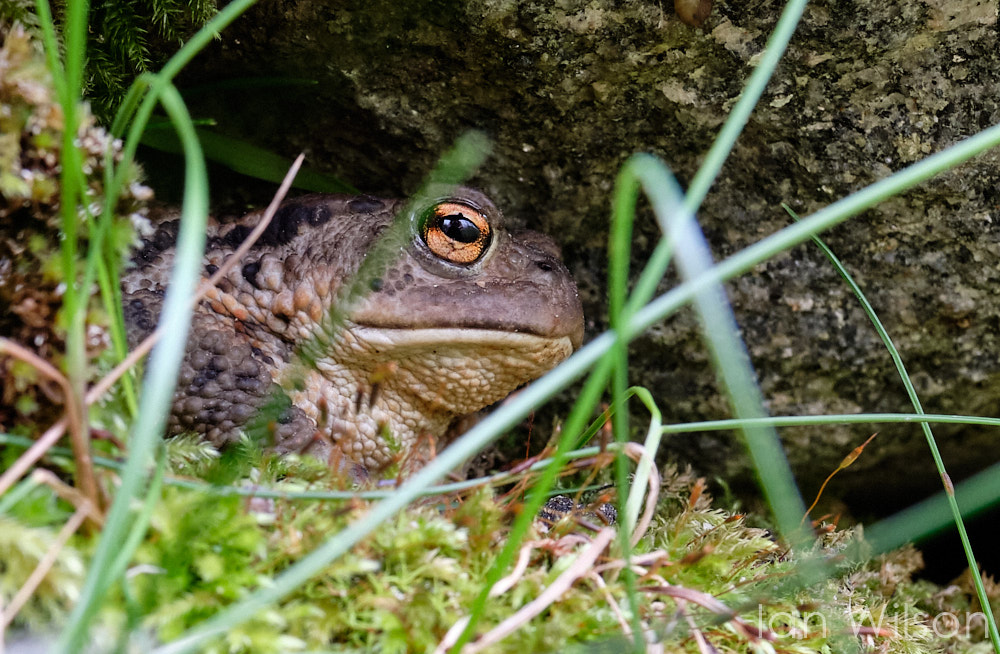
The previous pictures were taken at a viewpoint overlooking a bend in the river Dee. The road sign warned us to look out for wildlife; but, initially, the only thing we found was a desiccated (and rather dead) toad on the footpath. After a little bit of hunting, however, I discovered one of its brethren - this time very much alive - hiding in the undergrowth.
The lookout point is clearly a place for deceased humans as well as toads, with several memorial plaques with fresh flowers on the hillside.
Next stop, the Mar Lodge Estate.
Thursday, 2 January 2020
Scotland 2019 18: The Scottish Crannog Centre
After leaving the Edradour distillery, we decided to go for a drive to the Scottish Crannog Centre near Kenmore on Loch Tay. The area is famous for its crannogs - Iron Age wooden structures, built on stilts in the shallows of the loch and accessed via a wooden causeway - and the modern reconstruction was built by the Scottish Trust for Underwater Archaeology between 1994 and 1996. It is very much a piece of living experimental archaeology, as well as being open to the public. The latter requirement meant certain "health & safety" compromises, such as the addition of emergency lighting and reducing the distance between the crannog and the shore; but, even so, the crannog still gives an excellent feel for what life must have been like in one of these rather strange and unintuitive structures.
The notice says "dogs welcome", although the beautiful black labrador, who visited at the same time as us, discovered that the causeway made from tree trunks was a bit of a challenge.
One of the demonstrations on offer was the creation of fire from first principles. The basic technique is to use friction from a "spinning top" to create smouldering embers which are then dropped into dry wood shavings. Human "bellows" are employed to kindle the first flame, which can then be used to light the fire proper. The sequence below was taken over a period of a couple of minutes or so.
Jason is one of the Crannog Centre's Iron Age textile experts, and it was he who gave us a tour of the crannog itself. His insights into the the crannog way of life - and why they were built around Loch Tay in the first place - were absolutely fascinating. Highly knowledgeable, and a real character.
Sadly we arrived rather late in the afternoon at the Crannog Centre, meaning that we weren't able to sample all the activities on offer. Definitely a place to re-visit, though - possibly for one of their dyeing or leather-making workshops.
The notice says "dogs welcome", although the beautiful black labrador, who visited at the same time as us, discovered that the causeway made from tree trunks was a bit of a challenge.
One of the demonstrations on offer was the creation of fire from first principles. The basic technique is to use friction from a "spinning top" to create smouldering embers which are then dropped into dry wood shavings. Human "bellows" are employed to kindle the first flame, which can then be used to light the fire proper. The sequence below was taken over a period of a couple of minutes or so.
Jason is one of the Crannog Centre's Iron Age textile experts, and it was he who gave us a tour of the crannog itself. His insights into the the crannog way of life - and why they were built around Loch Tay in the first place - were absolutely fascinating. Highly knowledgeable, and a real character.
Sadly we arrived rather late in the afternoon at the Crannog Centre, meaning that we weren't able to sample all the activities on offer. Definitely a place to re-visit, though - possibly for one of their dyeing or leather-making workshops.
Labels:
Aberfeldy,
Archaeology,
Centre,
Crannog,
Scotland
Location:
Aberfeldy PH15 2HY, UK
Subscribe to:
Posts (Atom)