Monday, 15 December 2014

A few more from Southport

What a wonderful place to walk one's dogs in the late afternoon light (and an interesting angle from the pier too).


 Finally, a few views of Southport Marina Lake, along with bridges and shelters, in the early morning and late evening.


Friday, 12 December 2014

Soft Southport

The end of October saw our annual trip up to the PAGB Print Championships, only this time they were held in Ormskirk rather than Connah's Quay.  The nearest metropolis was Southport, and this is where the trusty quartet of Cambridge Camera Club members stayed for the event.  On arrival we decided to take in the sea air by having a bracing walk along the pier.  It was nippy to say the least, but since I've always had a "rose tinted" view of seaside towns, I thought I'd give the pictures the soft treatment.


Tuesday, 9 December 2014

Lens Calibration revisited

Regular readers of this blog will remember that, as an archetypal (i.e. anally retentive) engineer, I like to ensure that all the equipment I use is properly calibrated.  This was driven home to me forcibly when I started to get focus problems in the middle of nowhere.  In an attempt to knock the problem on the head, I acquired a Spyder LensCal and decided to do the job properly.  Needless to say the LensCal tool was significantly less easy to use than I'd hoped, with much of it being down to the difficulty of ensuring that the device and the sensor were parallel.

I've always liked Keith Cooper's Northlight Images site, and happened to come across an article called Camera AF Microadjustment - for free.  Being a dyed-in-the-wool Yorkshireman - and a frustrated lens calibrator - it was obviously worth a look.

Cutting a long story short, the technique relies on the fact that digital cameras take discrete samples (i.e. pixels).  A side effect of sampling is that capturing detail of a similar resolution to the camera's sensor will result in aliasing artefacts - often visible as Moire Patterns.  Checking focus is simplicity itself: display an image with very fine detail on a monitor, and attempt to focus on it with a camera.  Then adjust the focus calibration until the visibility of the Moire Pattern is maximised.  Unlike other techniques, spotting the critical focus position is very easy; and, by moving the focus ring manually after auto-focus, it's possible to determine whether the camera is front- or back-focusing.  Keith gives a link to download a suitable pattern file on his site, but in case this doesn't work I've put a copy here.

The setup I used was to link my laptop to a full-HD television using HDMI (the Moire image is 1000px square, so almost fills the screen).  As Keith explains, it is essential that the image is displayed at 1:1 resolution (I used Photoshop in "full screen" mode) as any scaling will introduce its own artefacts.


Using a television rather than a monitor has the advantage of being: (a) large; and (b) vertical.  I found that positioning the camera so that it was properly aligned was actually pretty straightforward.  This is partly because the rectangular frame of the TV was easy to align in the viewfinder, but also any misalignment was instantly visible since different parts of the image would "snap" into focus at different times.

Because of problems with scaling and sampling, the two images below may or may not show the effect I'm trying to demonstrate.  The first image is exactly in focus, with lots of interference patterns being visible.  The second image is very slightly out of focus, and the interference patterns - although present - are less distinct.


I went through my set of lenses, noticing that - while a few of them agreed with the LensCal results - many were significantly different.  The proof of the pudding was in the eating, though, and I tested all the lenses with their new calibration settings.  Each one was absolutely spot on having used the Moire method, which I guess is the clincher.

Here are two examples showing the full frame and then a 100% crop from two of the lenses whose calibration data changed significantly.  The first example uses the EF 50/1.8 mk1 and the second uses the EF 85/1.8 USM.  Both are shot at f/1.8.


While it's slightly worrying that the calibration data changed so much (the 85 went from -2 to -8, and the 50 went from +14 to -6!), I now have significantly more confidence that my lenses are set up correctly than I did before.

It's well worth reading Keith's article, and I'd be very interested to hear from anyone else who has tried the technique.  Not only is it free, but it actually seems to work!

Saturday, 6 December 2014

Sissinghurst

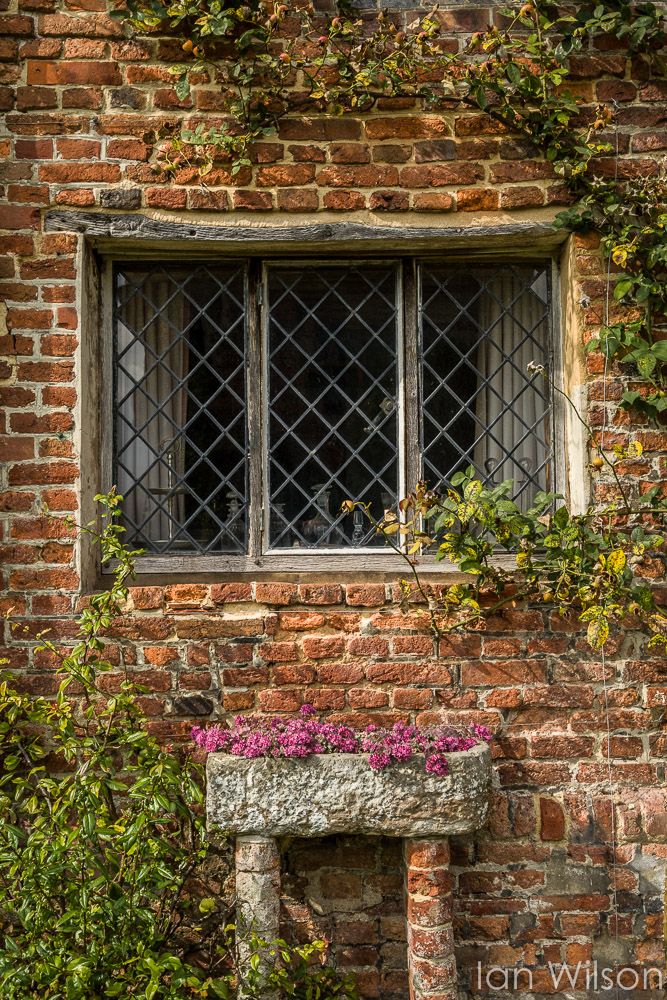
On the way home from our weekend in Sussex and Kent, Harriet and I decided to stop off at Sissinghurst Castle: the former home of Vita Sackville-West and Harold Nicolson, with its wonderful Tudor buildings and justifiably famous gardens.  Now owned by the National Trust, it was a lovely place to wander around for a few hours.  The Cafe wasn't half bad either...


Thursday, 4 December 2014

The Delights of Dungeness

Dungeness is a truly strange place with a very odd atmosphere.  It's the end of the line for the Romney, Hythe and Dymchurch Railway, so attracts families with children as well as "train spotter" types (all men, it has to be said) taking pictures of diminutive locomotives.  It's also the site of a rather bohemian settlement, made up of tin shacks and wooden huts, and typified by Derek Jarman's "Prospect Cottage" with its outside walls covered in poetry.  And, towering above both these (rather quaint) features, both literally and metaphorically, is an enormous nuclear power station and working lighthouse.  Something for everyone, in other words...


There are a couple of places to grab lunch in Dungeness, and we chose the one at the end of the railway which gave delightful and unrestricted views of the power station.  Here are two of the ladies in my life (including the dumb blonde - on the left, in case there's any confusion) enjoying what the Station Cafe has to offer.


I struggled to find anything photogenic associated with the power station, and this was the best I could come up with.  I know: pathetic!


It was clearly a good place for fishing, though, as there were several people on the beach trying their luck.


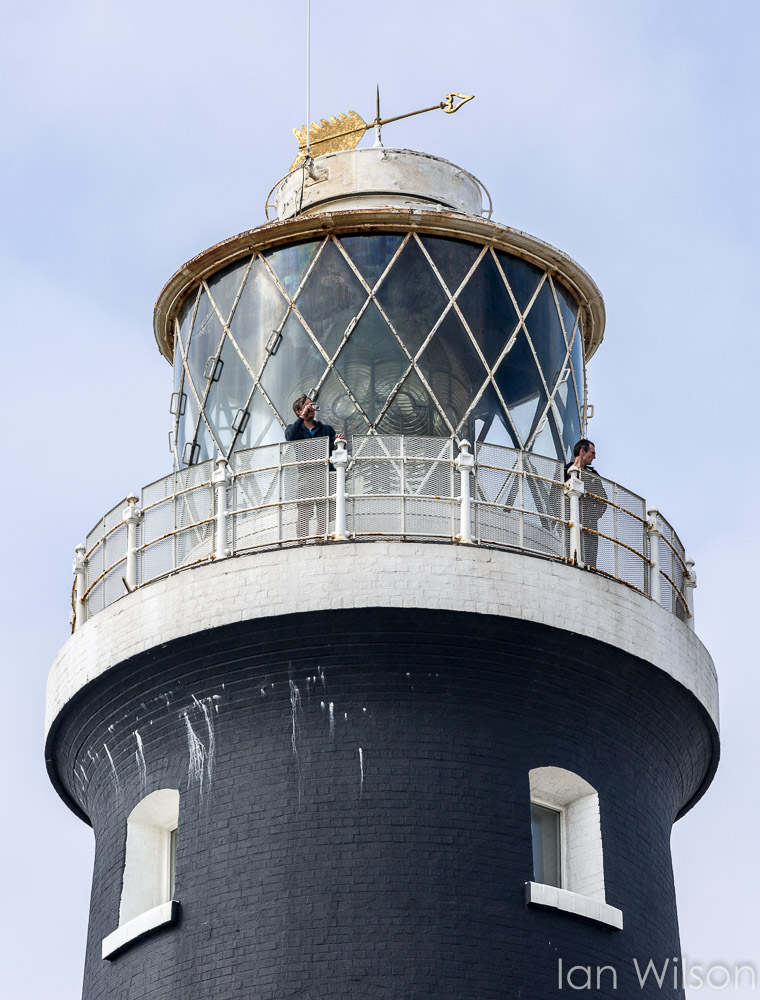
The lighthouse and surrounding buildings were slightly more inspiring than the power station, but the lighting was such that there was little point in wandering around the rest of the site.


Finally, a single image which rather summed up Dungeness for me.  One of the residents had clearly been beach-combing, and produced a pile of plastic junk which your average magpie would give its eye teeth for.  Impressive...


Like I said, a very strange place indeed.

Wednesday, 3 December 2014

Dungeness Nature Reserve

The murky conditions continued for much of Saturday, so we decided to do a bit of bird watching at the RSPB Nature Reserve in Dungeness.  I don't often suffer from "lens envy", but bird photography is one of those occasions where bigger is definitely better - especially when one's subjects are on the opposite shore of a large gravel pit!

First, the nuclear power station which forms a truly romantic backdrop to the nature reserve.


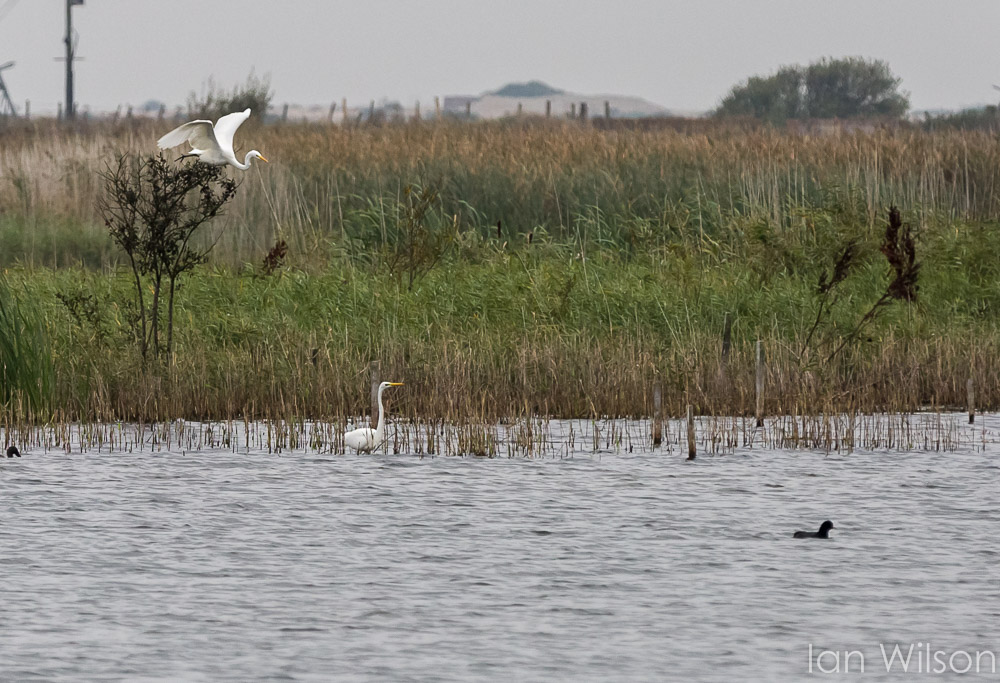
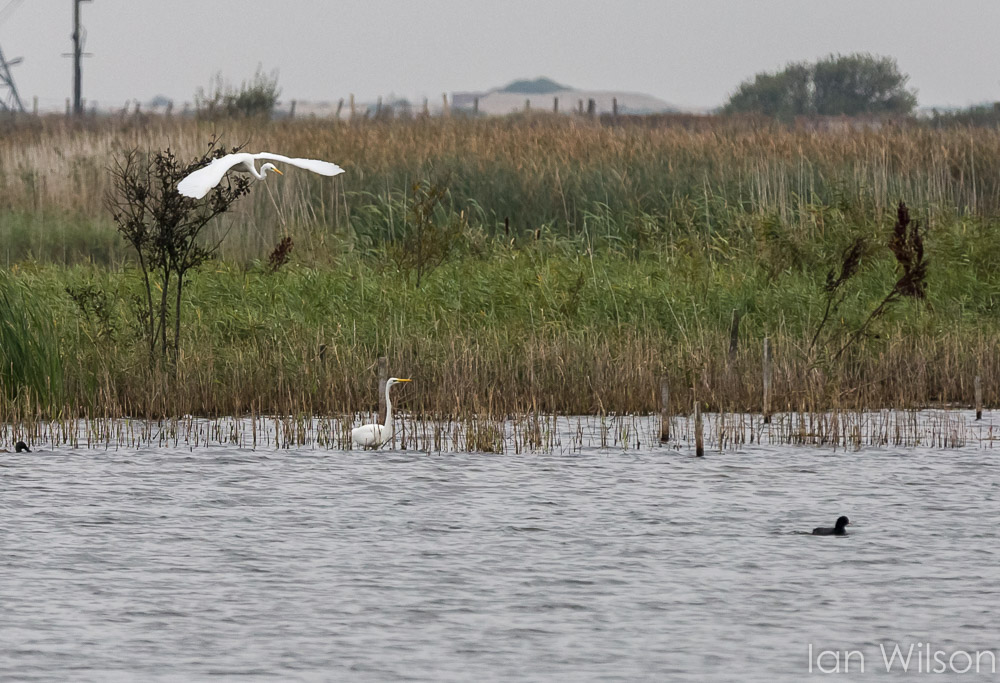
The grebes came relatively close to the hide, but the more interesting birds - such as the great white egrets - were miles away.  The sequence below is cropped very tightly, but gives some idea of the quality of the 70-200/2.8L IS mkII with a 1.4x mkIII converter.


The only other beasties which ventured close to the hide were a couple of dragonflies.  Why is it that, whenever one manages to capture these superb insects in such a way that they're nicely sharp, the background is always rubbish?

[Later note:  I'd originally thought these were Emperors, but a Wise Man has just informed me that they are actually Migrant Hawkers.  Even having looked at some reference images, I still find it difficult to tell them apart from their profile view.]


I always marvel at the way dragonflies tuck their "undercarriage" out of the way when flying.  Amazing creatures.