Sunday, 15 February 2015

Rats, squirrels (and the occasional bird)

Yesterday saw an RPS field trip to Wicken Fen to photograph landscapes and birds.  I spent the morning in the Roger Clarke hide helping people who were new to nature photography, as the location was suitable for those with relatively short lenses.  We didn't realise how short, though, as there was a feeder less than 2 metres away from the hide which was visited regularly by a brown rat!


The final picture is typical of several I managed to capture during the morning's session.  Those rats can't half move...


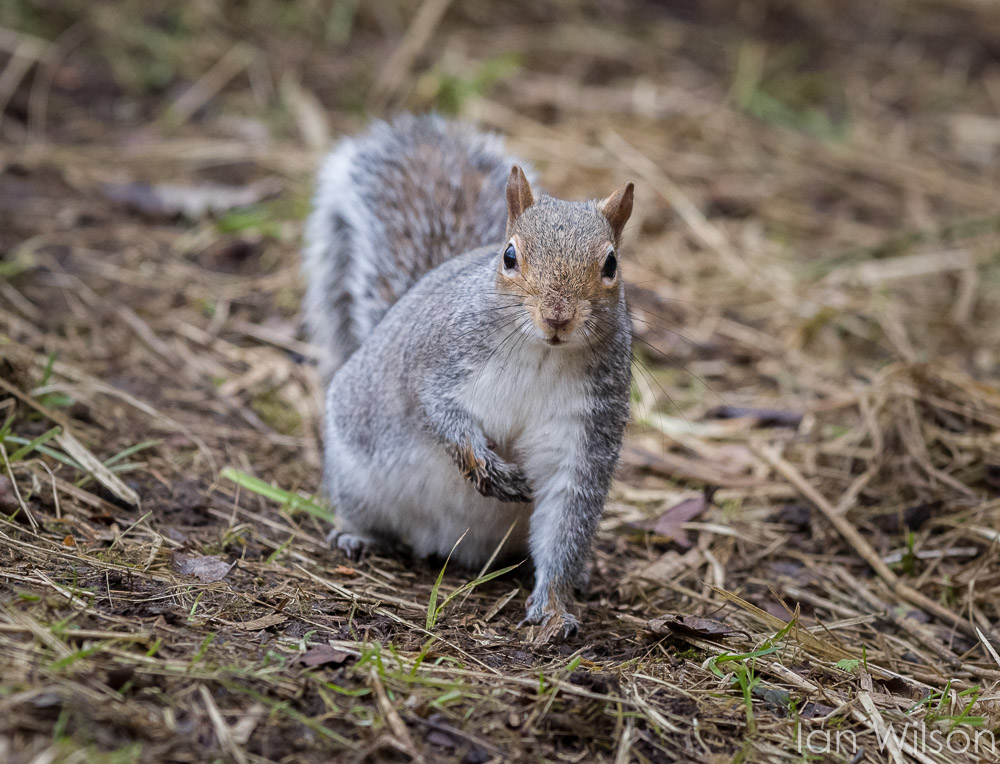
There wasn't much bird life around, but one of the other feeders attracted squirrels.


There were a few birds in view - mainly chaffinches and blue tits - but, as here, the odd blackbird, great tit and greenfinch.


We were also visited for a short period by a great spotted woodpecker.


The day ended with us standing by the visitors' centre in the gathering gloom waiting for the harriers to come in.  We saw three marsh harriers, along with the highlight of the day: a male hen harrier.  Too dark for a decent picture, but who cares with such a magnificent bird?

Sunday, 8 February 2015

Cley Marshes on a very grey day

The weather forecast was for dark cloud cover yesterday, but we headed to Cley Marshes on the North Norfolk coast for a spot of bird watching nevertheless.  We counted 27 species in total, which is not bad for a day's effort.

First up was a rather obliging little egret.


In ten-pin bowling, I think this might be called a "godwit split".


There were several marsh harriers flying around, but always in the far distance.


There were plenty of golden plover and lapwing to be seen.


And the more common-or-garden species, such as the wood pigeon (not a collared dove, as has been pointed out to me by several people!) and a pair of mallard.


I originally believed this to be a pochard pair, but Ann has since put me straight and told me they're wigeon.  That makes two mistakes in the original post, so I'll clearly have to do better in future!


I loved the shoveler, which seemed to have its beady eye on me.


We also saw a pair of stonechat, although I only managed to photograph the female.


The main treat of the day was a group of bearded tits which were feeding very close to the path.


Finally, Cley Mill with the leaden grey sky in the background, and my faithful dumb blonde who thoroughly enjoyed the walk around the perimeter of the bird reserve.


Thursday, 5 February 2015

You've read the blog posts; now be bored stupid by the book as well...

It's taken a little while to produce, but eventually I got round to creating the mother of all coffee table books.  In fact, given the weight and thickness, it will almost certainly be possible to use the book as a coffee table if necessary!

I decided to use Lightroom to produce the book, which turned out to be a double-edged sword.  It's very convenient to use arbitrary image formats, knowing that the software will be able to handle this.  On the other hand, some of the layouts are very restrictive, and the inability to create "custom" layouts is particularly frustrating.  Maybe Lightroom 6 will address some of these issues?


Tuesday, 20 January 2015

Amber

Before I gave it back to its rightful owner, I wanted to test the 2x mkIII teleconverter on my 70-200/2.8L IS mkII.  For travelling this is an attractive combination - on paper - but I needed to see what the compromises were.  For this test I was able to use my ever-faithful "dumb blonde" as a model, and she even cooperated on this occasion.  This allowed me to use different focal lengths and apertures to see how the lens+teleconverter performed.  Here are some of the results.


As with the 300/2.8L, the combination is soft at f/5.6 but sharpens up considerably at f/8 - in the centre at least.  At f/11 it's sharp across most of the frame, but this means it's necessary to work at a reasonably high ISO in order to stop the shutter speed dropping.  All of these shots were hand-held, as it's bad enough combining a dog and a camera on a walk without adding a tripod too!  As with my previous tests, the 1.4x mkIII produces superior results, but there are times when the extra reach could well be valuable.